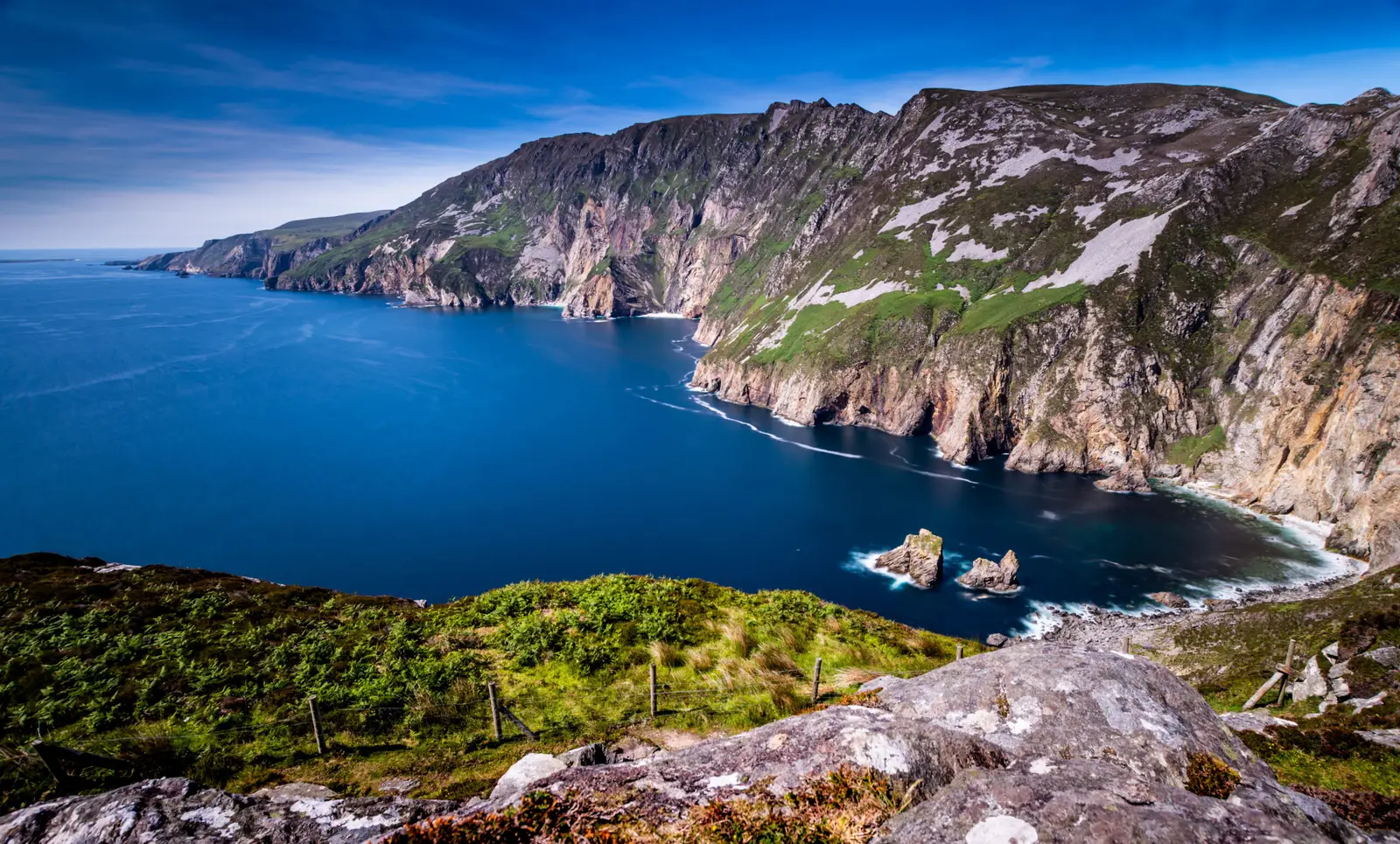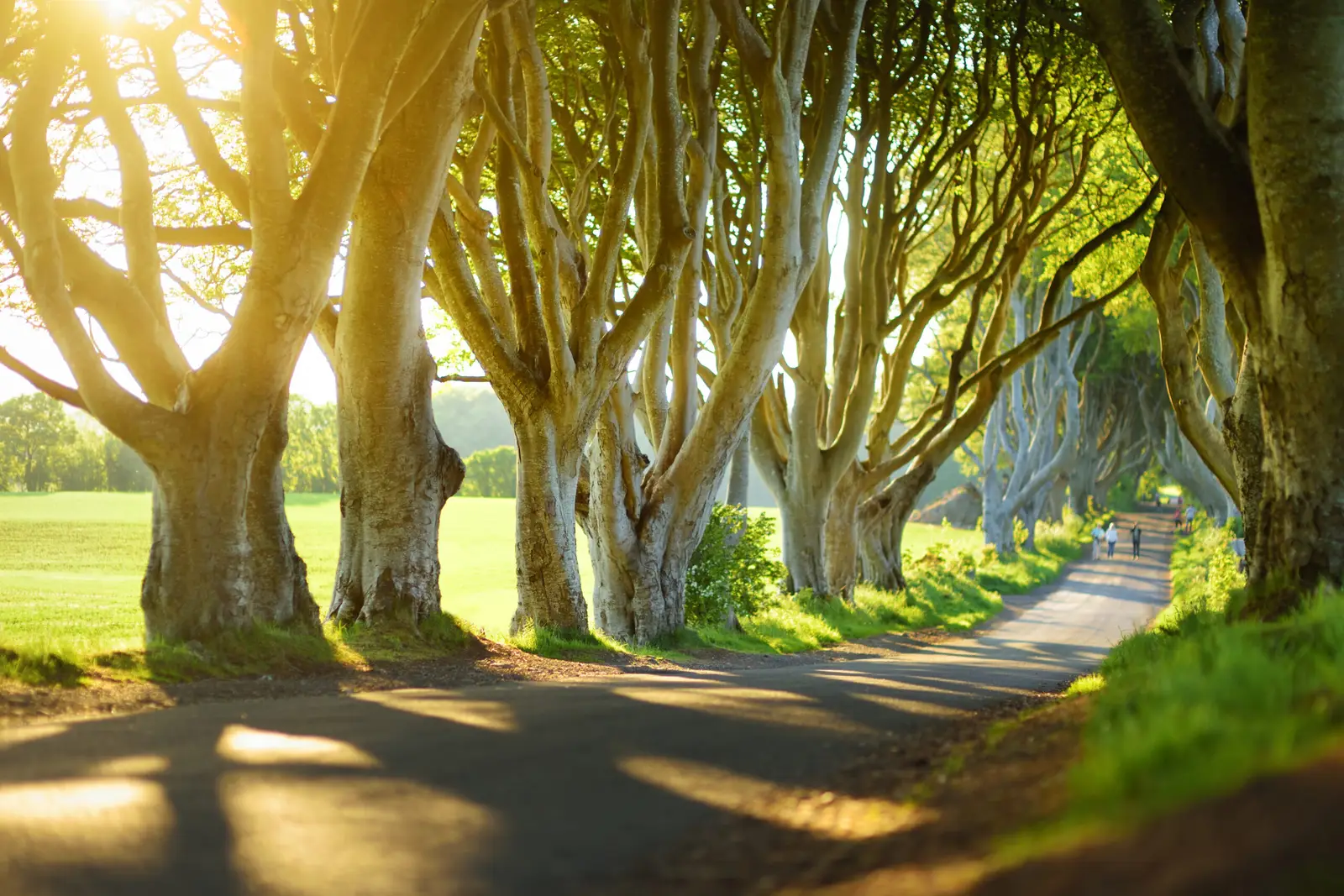
Ireland’s winding coastal roads, charming countryside lanes, and beautiful landscapes make it the perfect destination for a self-drive adventure. But if you’re visiting from abroad, you may have questions about what driving in Ireland is like. Even the most experienced drivers may find driving in Ireland different from what they are used to, so it is essential to know what to expect before your self-drive tour begins.
Driving Rules in Ireland
Before you start driving, it’s important to understand Ireland’s driving laws to ensure you don’t face any problems on the road.
Drive on the Left:
In Ireland, vehicles drive on the left-hand side of the road. If you’re used to driving on the right, take your time adjusting, especially at roundabouts and intersections. The driver’s seat will also be on the right side of the car, unlike in other countries where it is typically on the left.
Speed Limits:
Signs around the Republic of Ireland will show speed limits in kilometers per hour (km/h), while in Northern Ireland, speed limits will be shown in miles per hour (mph). If you are used to driving in miles, then keep in mind that 1 mile is approximately 1.6 kilometers.
Common limits:
- Motorways: 120 km/h (75 mph)
- National Roads (N roads): 100 km/h (62 mph)
- Regional Roads (R roads): 80 km/h (50 mph)
- Urban Areas: 50 km/h (30 mph)
Traffic Signals & Road Signs:
- Most road signs are in English, though in Gaeltacht (Irish-speaking) regions, signs are in Irish (Gaeilge).
- Roundabouts follow a clockwise direction. Give way to traffic coming from the right.
Seat Belts & Mobile Phones:
- Wearing a seat belt is mandatory for all passengers.
- Using a mobile phone while driving is illegal unless you have a hands-free device.
Drink Driving Laws:
Ireland has strict drink-driving limits. The legal blood alcohol limit is 0.05% (50mg per 100ml of blood), so it’s best to avoid alcohol if you plan to drive. Even having one drink could mean you are over the legal limit for driving.
What to Expect on Irish Roads
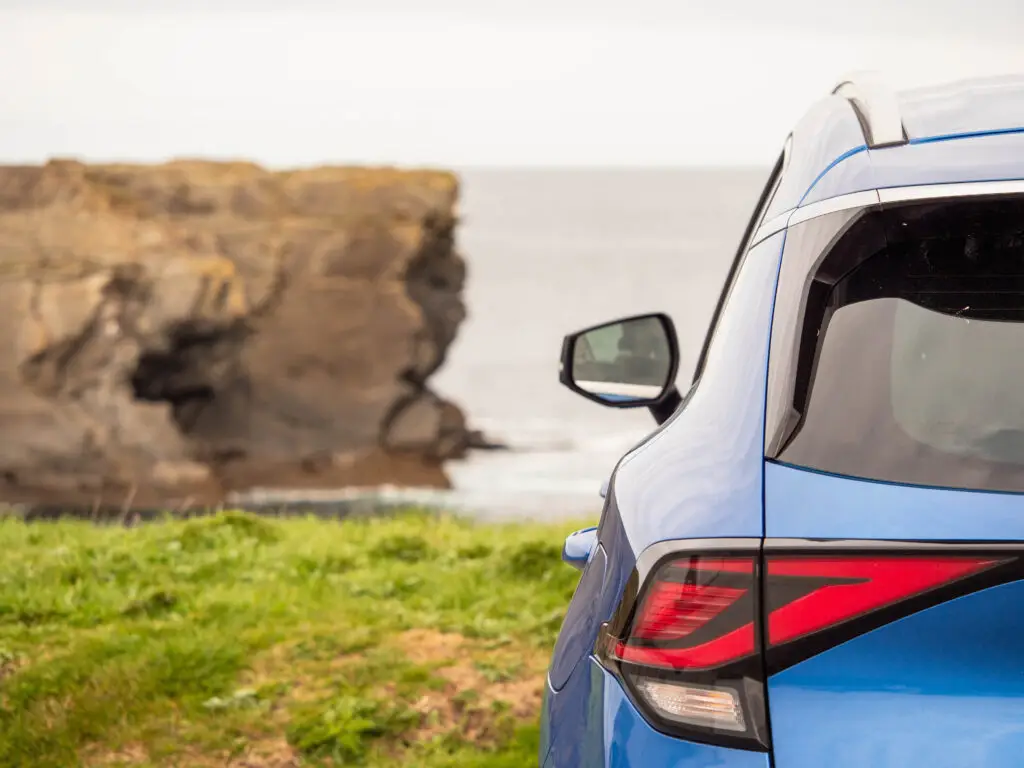
Narrow & Winding Roads
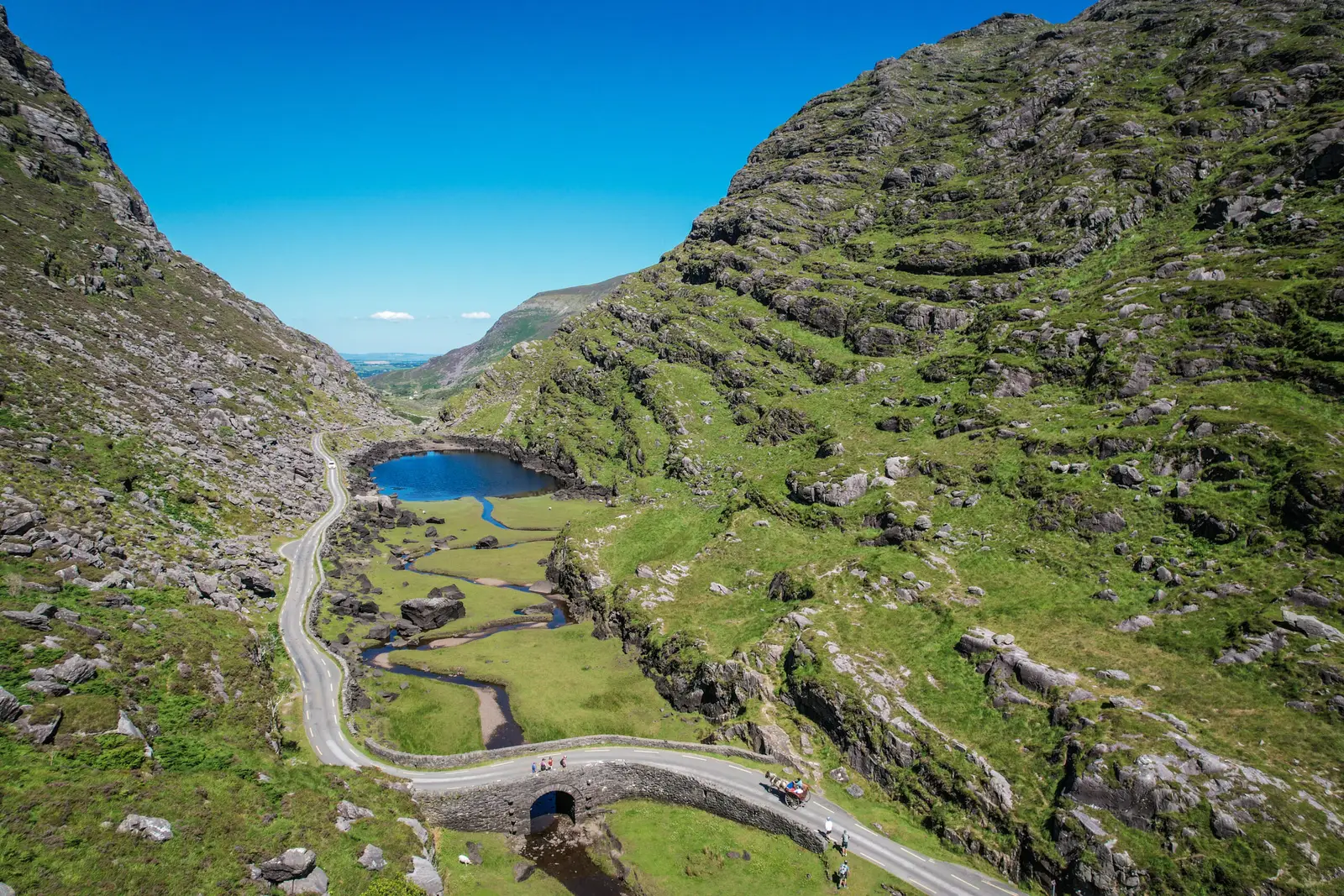
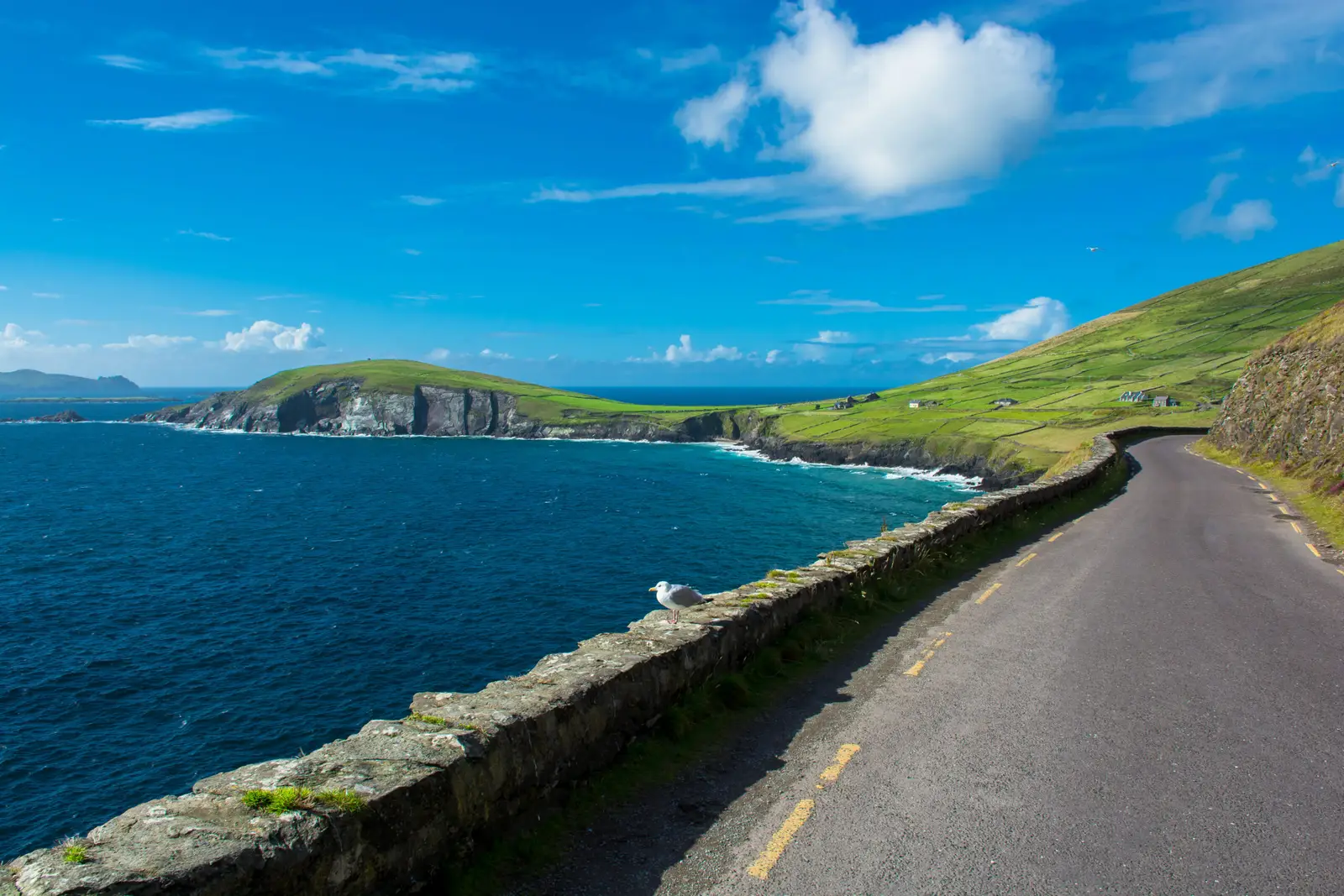
Many rural roads in Ireland are narrow, with sharp bends and stone walls on either side. Drive cautiously, and be prepared to yield to oncoming traffic in single-lane areas. Sometimes, narrow roads will not have center lines to separate opposing traffic, so make sure you are always driving as close to the left side of the road as possible.
Sheep & Wildlife on the Road
In the countryside, sheep, cows, and deer sometimes wander onto roads. Drive carefully in rural areas, especially in the west of Ireland. If you do come across wildlife in the road, you may need to drive slowly or even come to a complete stop until they have moved along.
Toll Roads
Some motorways (M roads) have tolls, with fees ranging from €1.90 to €3.10 per car. The M50 toll (Dublin) is electronic, meaning you must pay online before 8 PM the next day at www.eflow.ie.
Fuel Stations
Petrol (gasoline) and diesel are widely available, but in remote areas, stations may be far apart. Fill up when possible and plan ahead as to where you might refuel! Most rental cars in Ireland run on diesel, so double-check before refueling.
Top Tips for a Safe & Enjoyable Drive
Rent an Automatic (If You’re Not Used to a Manual)
Most rental cars in Ireland have manual (stick shift) transmissions. If you’re not comfortable with this, you can request an automatic car when booking.
Use a GPS or Google Maps
Many rural roads don’t have clear signage. GPS or smartphone navigation (like Google Maps) is essential for staying on track.
Be Ready for Roundabouts
Ireland has many roundabouts instead of stop signs, which may take some getting used to if roundabouts aren’t common in your home country. Always yield to traffic from the right and go clockwise.
Know the Parking Rules
In cities like Dublin, Cork, and Galway, on-street parking requires a “Pay & Display” ticket. Many towns have free parking in public car parks. Always check signs for restrictions.
Emergency Numbers
- Emergency Services: 112 or 999
- Roadside Assistance: Provided by rental companies – make sure you have the contact number in case of an issue.
Book a Self-Drive Tour of Ireland
Driving in Ireland may feel unfamiliar at first, but it’s the best way to explore the country at your own pace. If you want to explore Ireland without a travel guide, but benefit from an itinerary created by tour planners, you may benefit from a self-drive tour. This means you explore Ireland independently, but every aspect of your trip is planned for you, including car rentals, accommodations, tour tickets, and map routes.
Visit our website to learn more about what you can expect from a self-drive tour of Ireland.
https://www.rsa.ie/services/learner-drivers/resources/rules-of-the-road
2. Citizens Information – Speed Limits in Ireland (Updated Feb 2025)
3. Department of Transport – Slower Speeds, Safer Roads Campaign